Crisis Support (SOS)
Immediate access to grounding exercises, breathing techniques, and location-based crisis helplines when you need support most.
🚨 In a Life-Threatening Emergency
If you or someone else is in immediate danger, call emergency services right now:
- UK: 999
- USA/Canada: 911
- Australia: 000
This app is a support tool, not a substitute for emergency medical care or crisis intervention.
What is the SOS Feature?
The SOS (Crisis Support) feature provides quick access to evidence-based distress tolerance exercises and region-specific crisis helplines. It's designed to help you get through moments of acute emotional intensity or crisis.
Accessing SOS
- Look for the SOS or Crisis Support button on your home screen
- It may also appear as a persistent widget or quick-access button in your toolbar
- Tap to open the SOS menu with all available resources
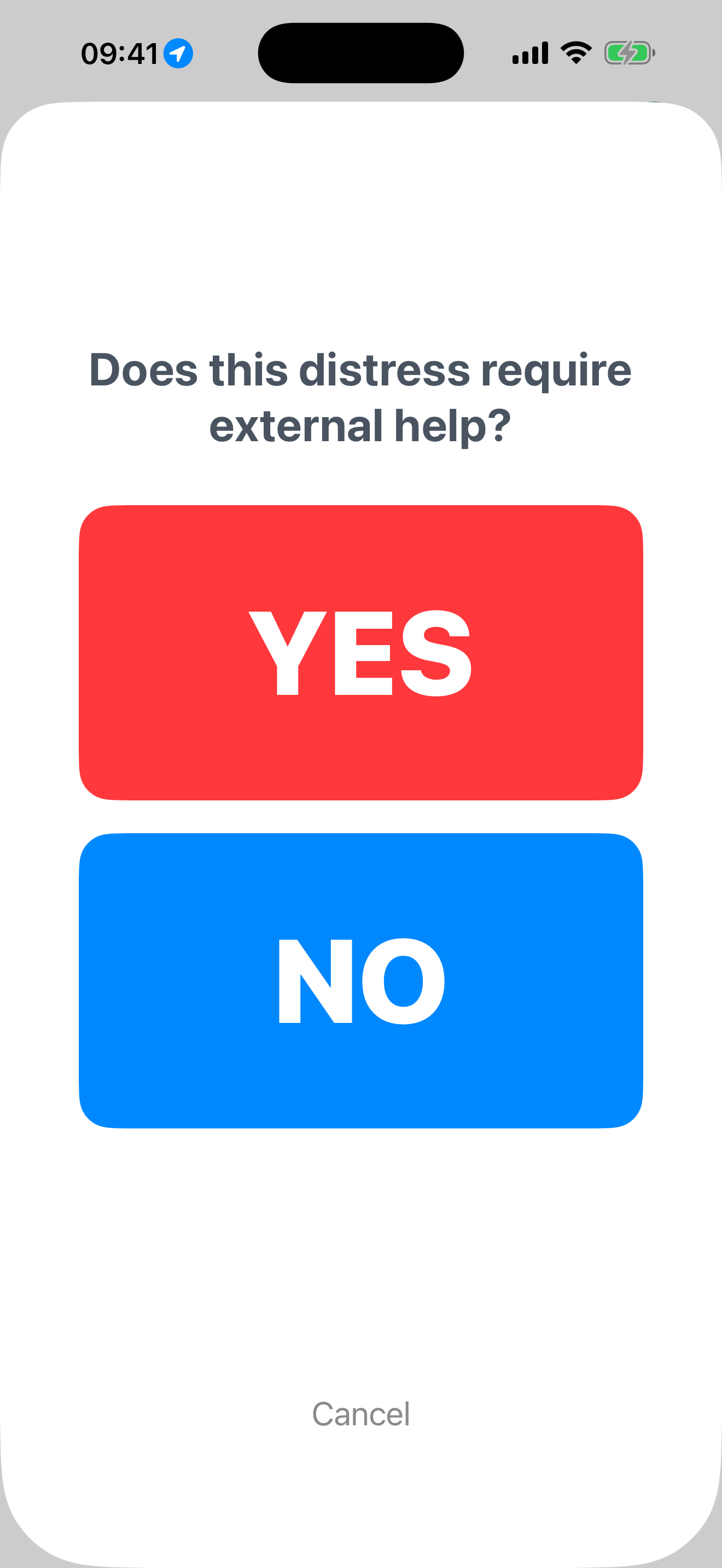
Available Exercises & Resources
When you open SOS, you'll see six options designed to help you regulate in the moment:
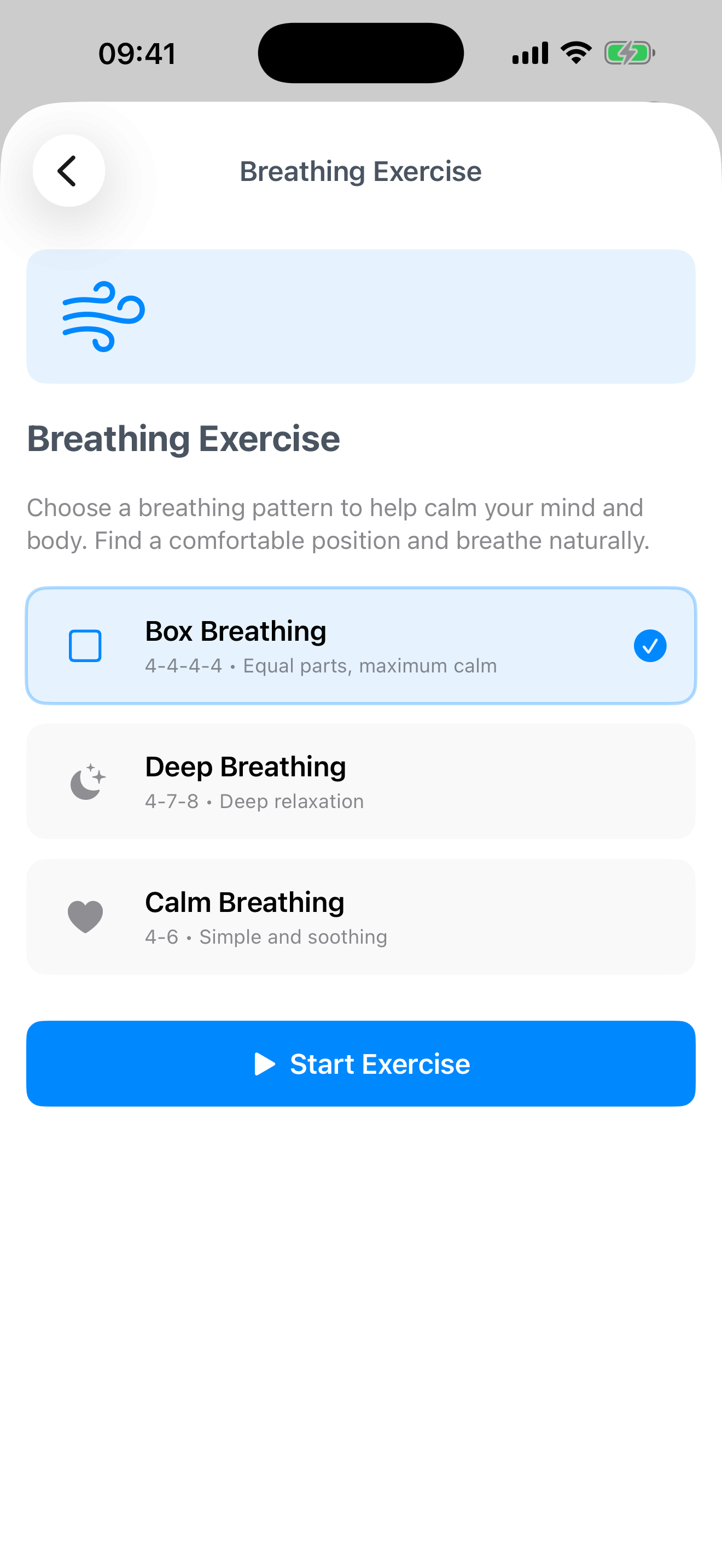
Breathing Exercise
Guided breathing patterns with visual animations and haptic feedback to help you calm your nervous system.
What You'll Find:
- Box Breathing (4-4-4-4): Equal parts inhale, hold, exhale, hold — promotes maximum calm
- Deep Breathing (4-7-8): Long exhale for deep relaxation and sleep readiness
- Calm Breathing (4-6): Simple, soothing pattern for quick grounding
How It Works:
- Select your preferred breathing pattern
- Tap "Start Exercise"
- Follow the animated circle as it expands (inhale) and contracts (exhale)
- Feel gentle haptic pulses to guide your rhythm
- Continue for as many cycles as you need
- Tap "End" when you're ready to stop
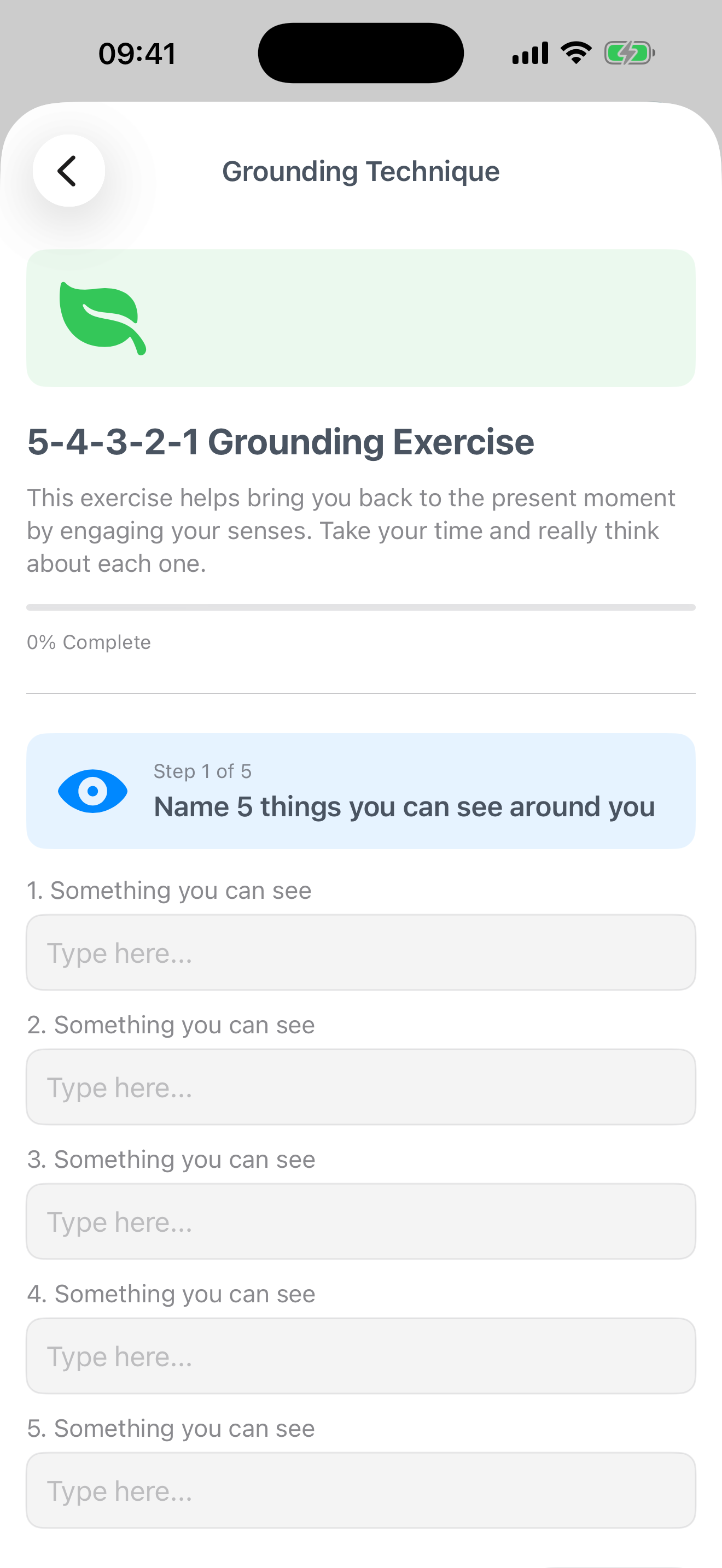
Grounding Technique (5-4-3-2-1)
A classic mindfulness exercise to bring you back to the present moment using your five senses.
What You'll Do:
- Name 5 things you can see around you
- Name 4 things you can touch (and touch them)
- Name 3 things you can hear
- Name 2 things you can smell
- Name 1 thing you can taste
This exercise interrupts overwhelming thoughts and grounds you in physical reality.
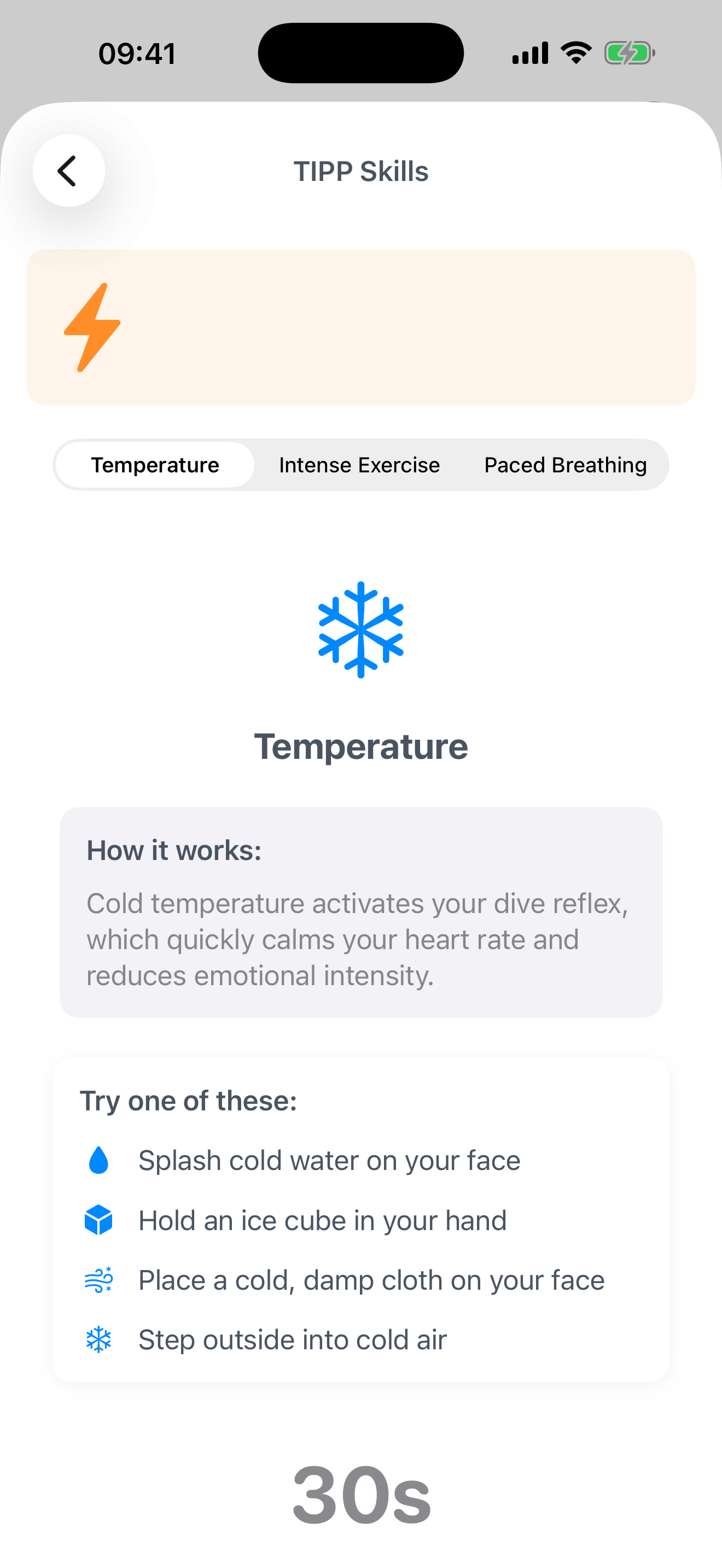
TIPP Skills
TIPP is a DBT acronym for rapidly changing your body chemistry to reduce intense emotion:
- Temperature: Use cold water on your face or hold ice to activate your "dive reflex"
- Intense Exercise: Do jumping jacks, run in place, or any vigorous movement for 60 seconds
- Paced Breathing: Slow your breathing to calm your heart rate
- Paired Muscle Relaxation: Tense and release muscle groups progressively
The app provides step-by-step instructions for each technique.
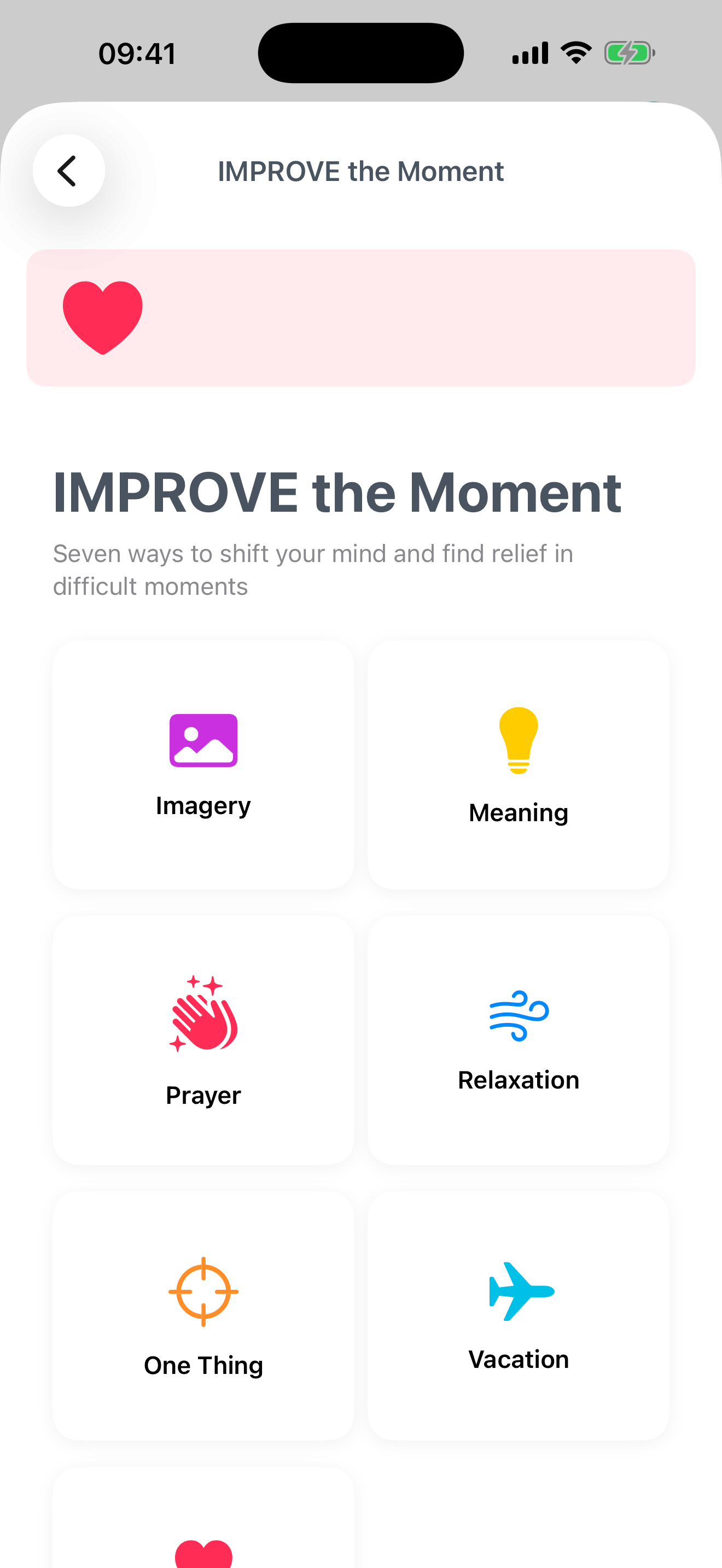
IMPROVE the Moment
IMPROVE is another DBT skill set for making a difficult moment more tolerable:
- Imagery: Visualize a peaceful scene or safe place
- Meaning: Find purpose or lesson in the struggle
- Prayer: Use spiritual connection or meditation
- Relaxation: Progressive muscle relaxation or guided rest
- One thing in the moment: Focus fully on a single task
- Vacation: Take a brief mental or physical break
- Encouragement: Use positive self-talk
Self-Soothing
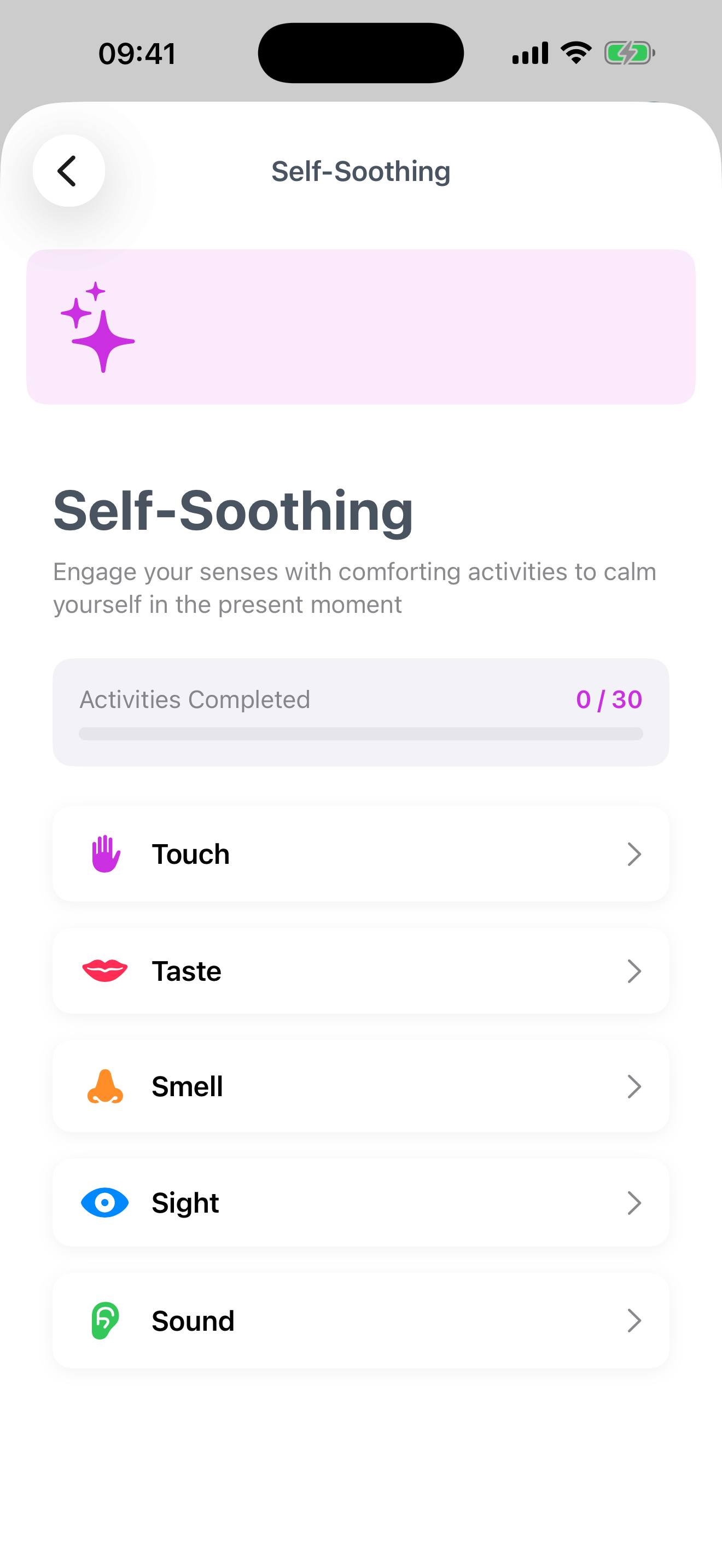
Self-soothing uses the five senses to comfort yourself during distress:
- Vision: Look at something beautiful (nature, art, photos)
- Hearing: Listen to calming music or sounds
- Smell: Use pleasant scents (candles, essential oils, flowers)
- Taste: Enjoy a favorite food or drink mindfully
- Touch: Feel comforting textures (soft blanket, warm bath, pet)
The app provides prompts and ideas for each sense.
Emergency Contacts
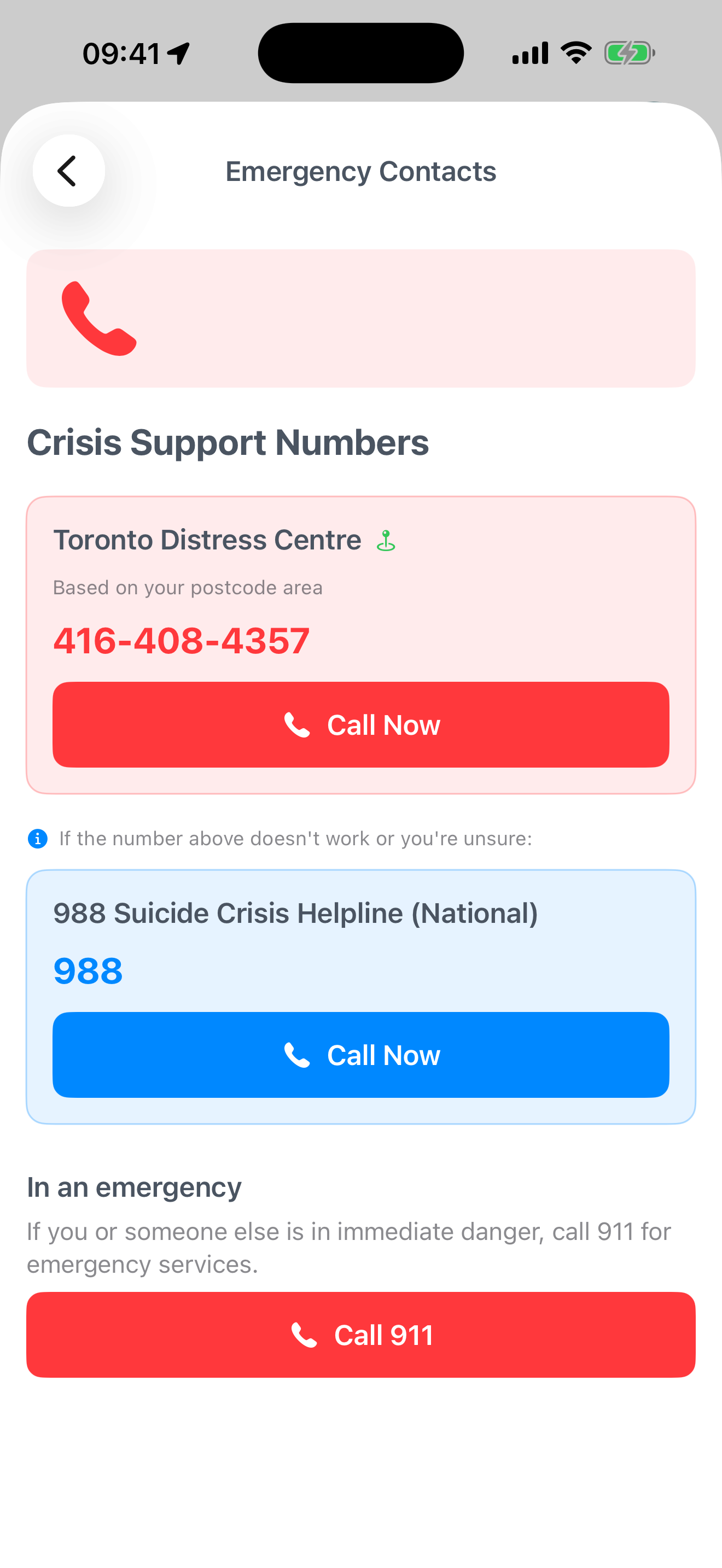
Access location-based crisis helplines and mental health support numbers.
How It Works:
- When you open Emergency Contacts, Bifocal requests your location (optional)
- Based on your country and region, you'll see relevant crisis numbers
- Tap "Call Now" to dial directly from the app
Supported Regions:
- United Kingdom: Local NHS crisis teams, national helplines (111, Samaritans)
- Canada: 988 Suicide Crisis Helpline, regional services in major cities (Toronto, Montreal, Vancouver, Calgary, etc.)
- USA: 988 Suicide & Crisis Lifeline, local resources in select metro areas
- Australia: Lifeline (13 11 14), regional crisis teams in major cities
Unsupported Regions:
If you're in a country not yet supported, Bifocal will direct you to findahelpline.com, a global directory of crisis resources.
Tips for Using SOS Effectively
Use Before Crisis Peaks
Don't wait until you're completely overwhelmed. Use SOS exercises early when distress is building, not just in full crisis.
Practice When Calm
Try the breathing and grounding exercises when you're already regulated, so they're familiar and effective when you need them most.
Experiment to Find What Works
Everyone responds differently to distress tolerance skills. Try all six options and note which ones help you most.
Combine Skills
You can use multiple exercises in sequence. For example, start with TIPP to change your physiology, then use grounding to focus your mind.
Don't Hesitate to Call
Crisis helplines exist for a reason. If you're struggling, reach out. You don't need to be "in crisis enough" to deserve support.
When to Use SOS
The SOS feature is designed for moments of acute distress. Consider using it when you experience:
⚡ Panic or Anxiety
Racing heart, can't catch your breath, feeling like something terrible is about to happen
😢 Overwhelming Sadness
Intense grief, hopelessness, or despair that feels unbearable
😡 Intense Anger
Rage that might lead to saying or doing something you'll regret
💭 Intrusive Thoughts
Thoughts of self-harm, suicide, or other harmful behaviors
😵 Dissociation
Feeling disconnected from reality, numb, or "not really here"
🌊 Emotional Flooding
Feeling completely overwhelmed by multiple emotions at once
⚠️ Important Reminder
The SOS feature provides tools and resources, but it is not a substitute for professional mental health care, therapy, or emergency services.
If you are experiencing thoughts of suicide or self-harm, please reach out to a crisis helpline, go to your nearest emergency department, or contact your therapist or doctor immediately.
You deserve support. You are not a burden. Help is available.