✍️
Writing Diary Entries
Track your emotions, process experiences, and reflect on your DBT practice in a private space.
Why Keep a DBT Diary?
Diary entries help you identify emotional patterns, track triggers, and see progress over time. They're also a safe place to express difficult feelings without judgment.
1
Create a New Entry
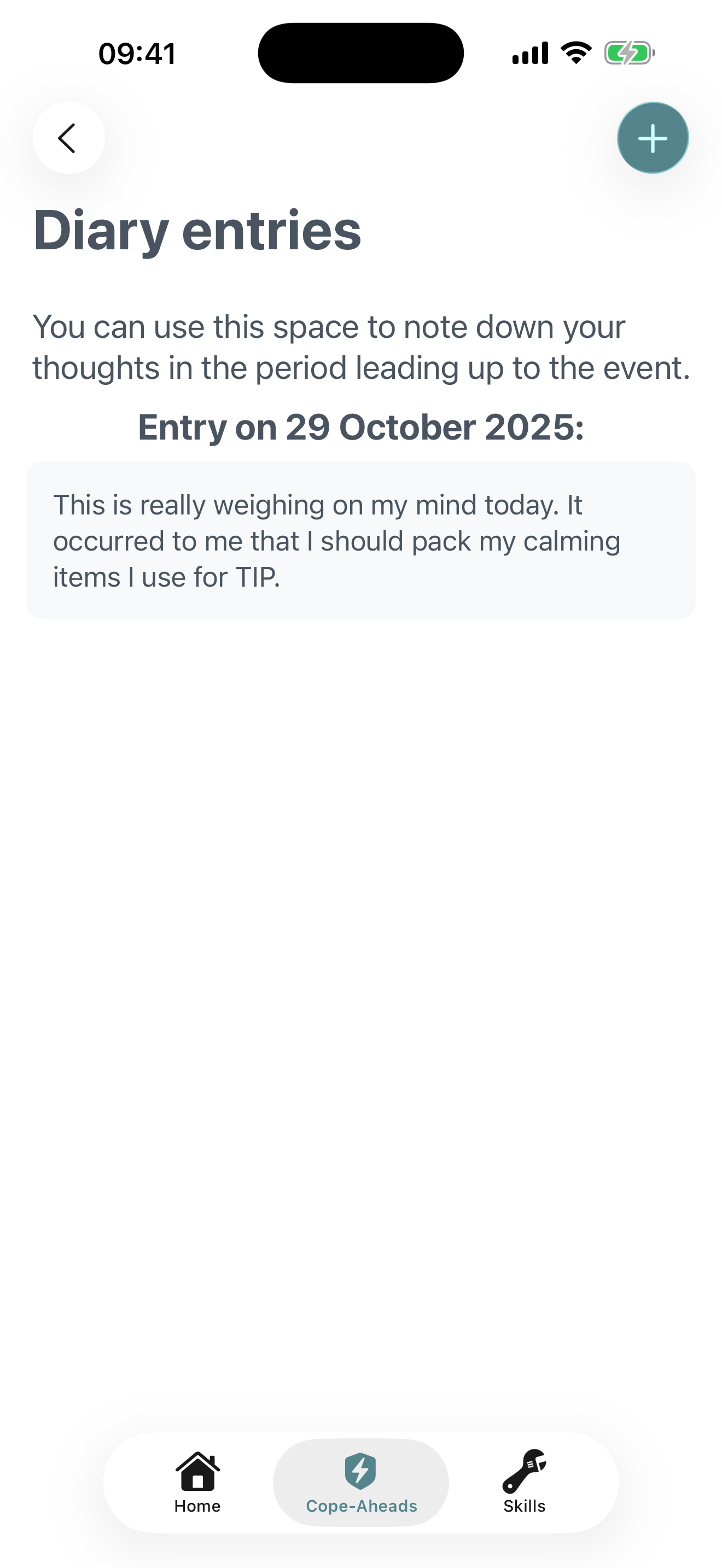
- You can create new Diary Entries for Cope-Aheads and Skill Logs
- For Cope-Aheads, click a specific one to go to a page showing more detail, where you'll be prompted to append any number of Diary Entries you need.
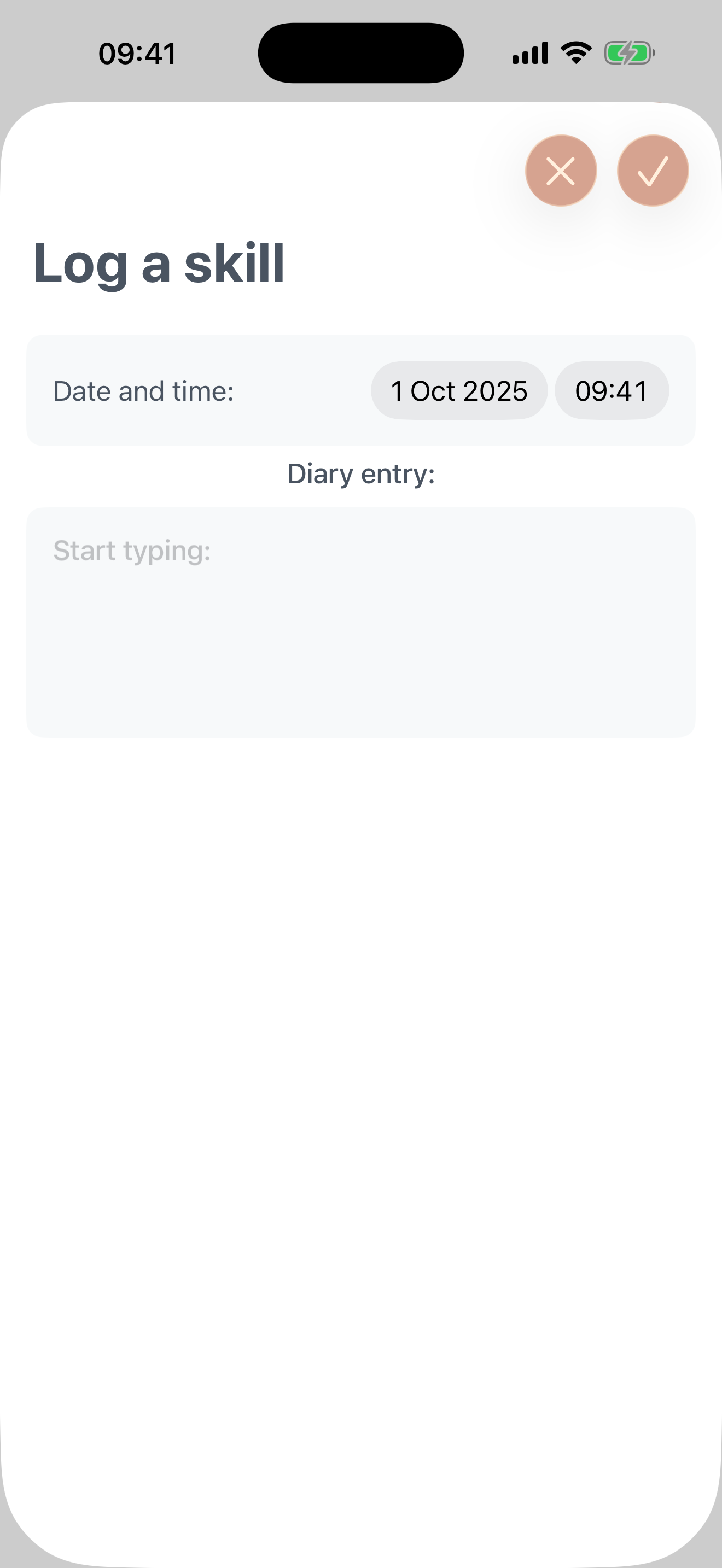
- For Skill Logs, head to a specific Skill's page to browse the existing logs like usual. Click on a specific log to be presented with a textbox to fill out.
- For Skill Logs you can create a Diary Entry at the time of logging, too.
2
Write Freely
Your diary is completely private. Write about:
- How you're feeling emotionally
- Situations that triggered strong emotions
- Skills you practiced and how they worked
- Challenges you're facing
- Wins you want to remember
- Anything else on your mind
Privacy Promise: Your diary entries are stored locally on your device (and securely in your encrypted iCloud). We cannot read your entries - they're yours alone.
Journaling Prompts
Not sure what to write? Try these DBT-focused prompts:
Emotion Identification
- What am I feeling right now?
- What triggered this emotion?
- What thoughts are connected to this feeling?
Skill Practice
- What skills did I use today?
- What worked? What didn't?
- What will I try differently next time?
Self-Validation
- What was hard about today?
- How did I cope with difficulty?
- What am I proud of, even if it's small?
Pattern Recognition
- Is this a familiar situation?
- What patterns am I noticing?
- What have I learned?
Tips for Effective Journaling
Make It a Habit
Try writing at the same time each day - many people find bedtime works well for reflection.
No Pressure for Length
Even a few sentences is valuable. You don't need to write essays unless you want to.
Focus on Skills
When you write about challenges, also note what skills you used or could have used.
Practice Self-Compassion
Write to yourself like you'd speak to a friend - with kindness and understanding.