Creating Cope-Aheads
Prepare for difficult situations before they happen with proactive coping strategies.
What is Coping-Ahead?
Cope Ahead is a DBT skill from the Distress Tolerance module. It involves identifying situations that might be challenging and planning specific coping strategies in advance. By rehearsing how you'll handle difficult moments, you're better prepared when they actually occur.
Access Cope-Ahead Planning
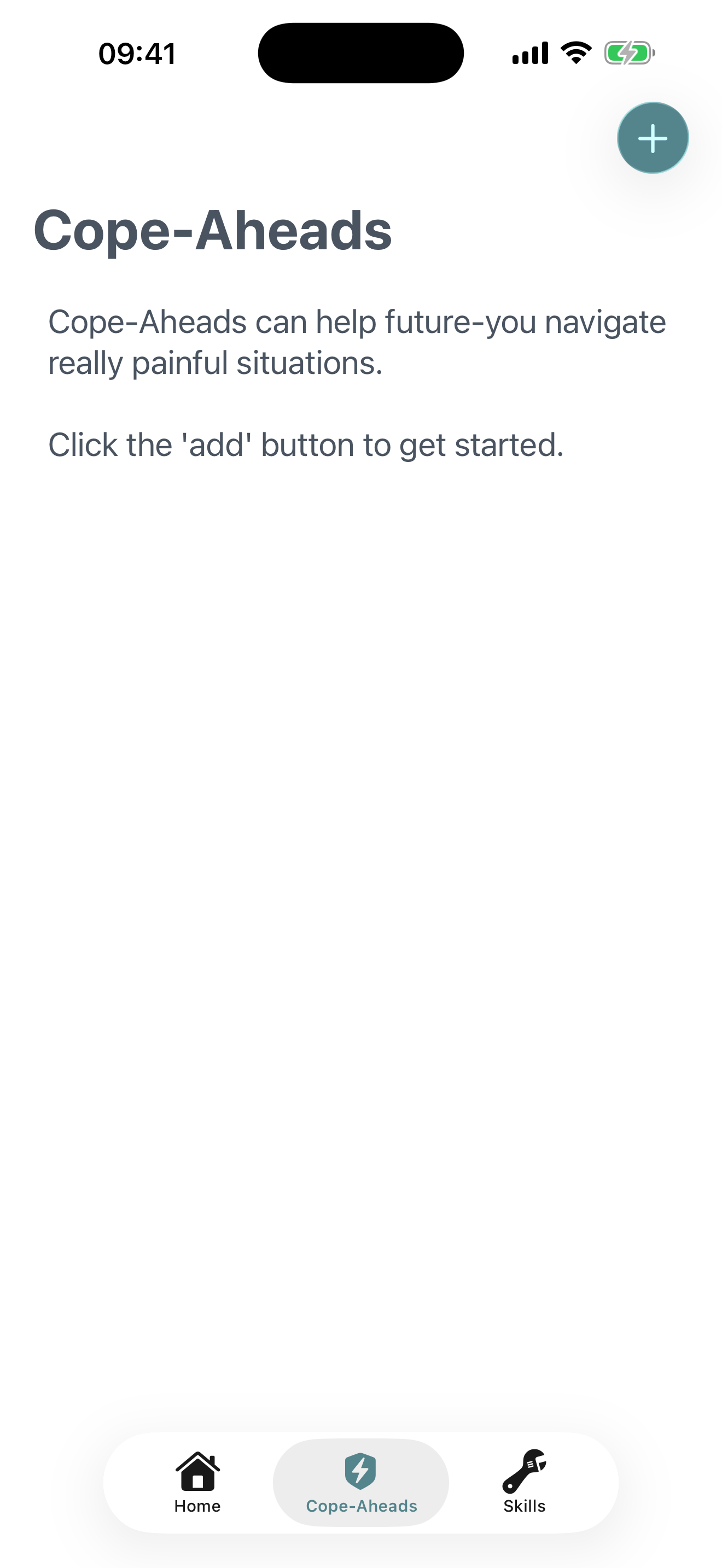
- Tap the Cope-Ahead tab in the bottom navigation
- If you don't already have some Cope-Aheads, you'll see a prompt on a blank screen.
- Tap the "+ New Cope-Ahead" button
Identify the Situation
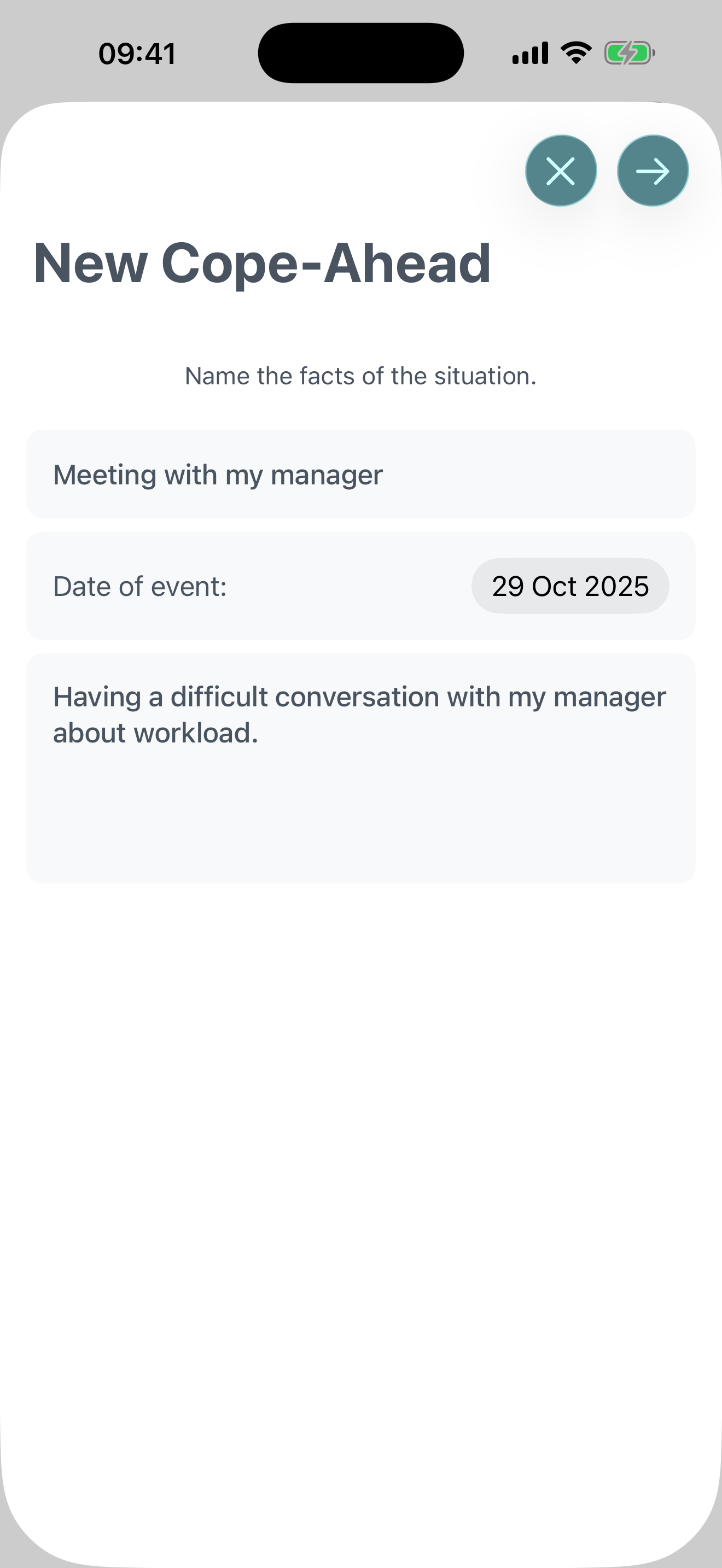
Start by describing the challenging situation you want to plan for:
- Be Specific: Instead of "social situations," write "attending my cousin's wedding where I'll see my family"
- Focus on Upcoming Events: Cope Ahead works best for situations you know are coming
- Include Triggers: Note what specifically makes this situation difficult
- Set a date: Tell Bifocal exactly when the event will be taking place
- "Having a difficult conversation with my manager about workload"
- "Attending a family dinner where political arguments usually happen"
- "Going to the dentist (I have medical anxiety)"
- "First day back at work after medical leave"
Identify Your Emotions and Reactions
Think about how you typically respond to this situation:
- What emotions come up? (anxiety, anger, sadness, overwhelm?)
- What unhelpful thoughts might arise?
- What are your typical problematic responses? (avoiding, lashing out, shutting down?)
Understanding your patterns helps you plan more effective coping strategies.
Choose Coping Skills
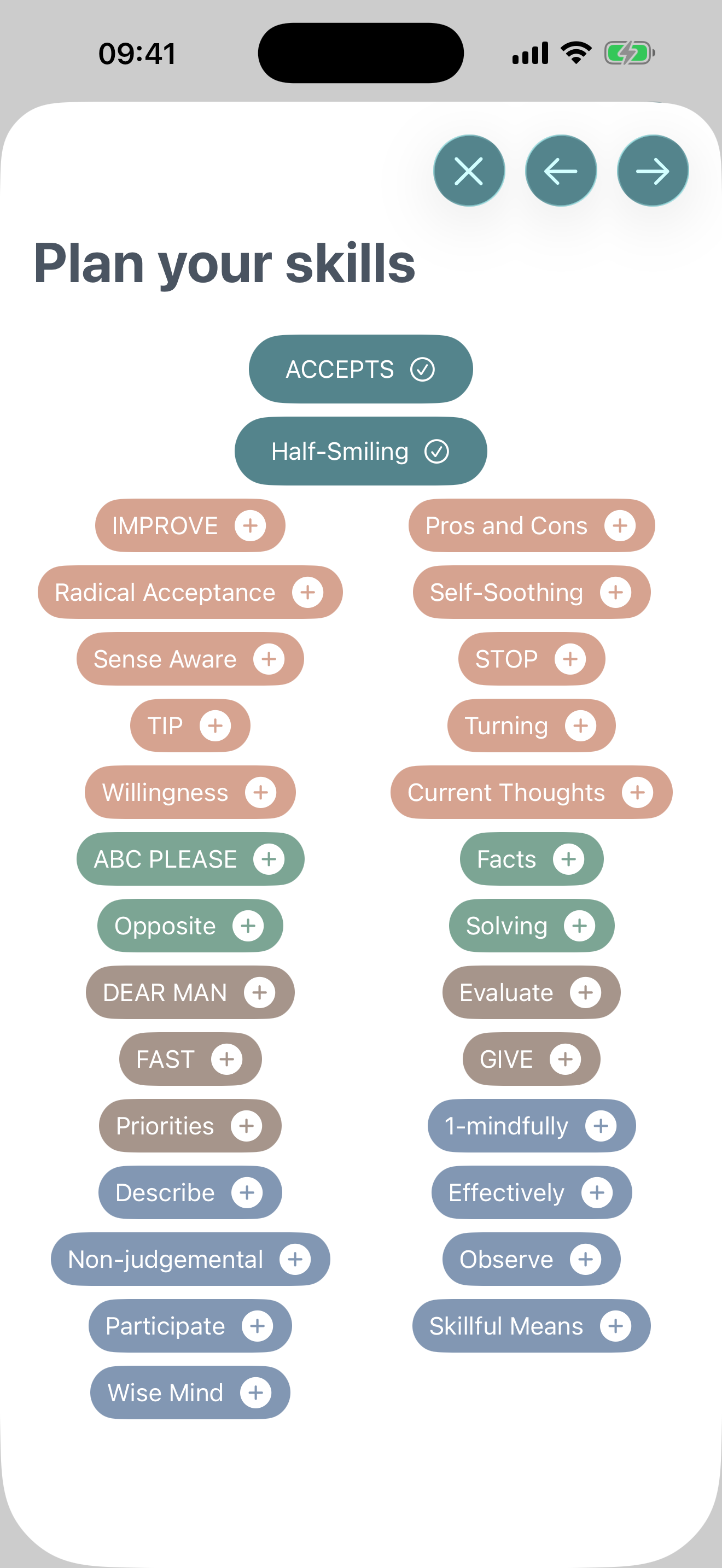
This is the heart of Cope Ahead. Select specific DBT skills you'll use:
Before the Situation
- Practice mindfulness meditation
- Use ACCEPTS to distract from anticipatory anxiety
- Do opposite action (go even if anxious)
- Mentally rehearse using skills
During the Situation
- STOP skill to pause before reacting
- TIPP to manage intense emotions
- Check the Facts to challenge thoughts
- Use DEAR MAN for assertive communication
After the Situation
- Self-soothe with pleasant activities
- Validate your emotions
- Process with diary entry
- Praise yourself for using skills
In Bifocal, you can link specific skills from your skills library to your Cope-Ahead plan.
Mental Rehearsal
After creating your plan, practice mental rehearsal:
- Visualize the scenario - Imagine the situation in detail
- See yourself using skills - Picture yourself calmly applying your chosen strategies
- Practice self-talk - Repeat coping statements ("I can handle this," "I've prepared for this")
- Rehearse multiple times - The more you mentally practice, the more automatic it becomes
Real-World Examples
Social Anxiety: Holiday Party
Situation: Company holiday party where I don't know many people
Emotions: Anxiety, self-consciousness, fear of judgment
Coping Plan:
- Before: Practice TIPP (cold water on face), arrive slightly early to settle in
- During: Use GIVE skills in conversations, take breaks in restroom if overwhelmed
- Have an exit strategy: Set a specific time I can leave guilt-free
- After: Self-soothe with favorite movie, validate that social situations are hard for me
Medical Anxiety: Doctor's Appointment
Situation: Annual physical exam (I have white coat syndrome)
Emotions: Panic, dread, physical symptoms of anxiety
Coping Plan:
- Before: Paced breathing for 5 minutes in car, bring fidget tool
- During: Tell doctor about anxiety upfront, focus on breathing, use paired muscle relaxation
- After: Reward myself with coffee at favorite café, log skill use in Bifocal
Work Conflict: Difficult Conversation
Situation: Need to tell my supervisor I'm overwhelmed with workload
Emotions: Fear of conflict, guilt, worry about being perceived as lazy
Coping Plan:
- Before: Write out DEAR MAN script, practice with friend, check the facts about my workload
- During: Stay mindful, use DEAR MAN (be Descriptive, Express, Assert, Reinforce), GIVE to maintain relationship
- After: Regardless of outcome, validate that asking for help is brave, not weak
Tips for Effective Cope-Ahead Plans
Write It Down
Don't just think about it - use Bifocal to write out your plan. When you're in the stressful moment, your brain won't remember. Having it written helps you follow through.
Be Realistic
Choose skills you've actually practiced and know how to use. Cope Ahead isn't the time to try something brand new.
Review Multiple Times
Read through your Cope-Ahead several times before the event. Mental rehearsal makes the skills more accessible when you need them.
Include Small Rewards
Plan something positive for after the situation, regardless of how it goes. You deserve credit for trying.